
Pelvic organ prolapses (POP) are very common in the female population. Its estimated 1 in 3 women will experience a POP during their lifetime, even if they have not had children.
A POP is when one or more pelvic organs start to descend downwards in the vagina, this can be the bladder, bowel, rectum, or uterus. Commonly a feeling of ‘something coming down’ or vaginal heaviness is experienced. In some cases, the bulge experienced may be felt inside the vagina or outside. A POP can also cause a variety or other symptoms such as incontinence, dryness, or sexual symptoms.
Some days you may not be aware of it but others symptoms may be persistent and bothersome. Some activities can make it feel worse, such as, a long day of standing or after opening your bowels. POP vary in severity but seeking assistance is critical to preventing as negative affects to quality of life.
What factors increase the chances of experiencing a POP?
- Pregnancy and childbirth
- Obesity and being overweight
- Heavy lifting/prolonged sitting
- Family history
- Older in age
- Menopausal changes
- Constipation
- Previous pelvic surgery
The importance of physiotherapy and POP
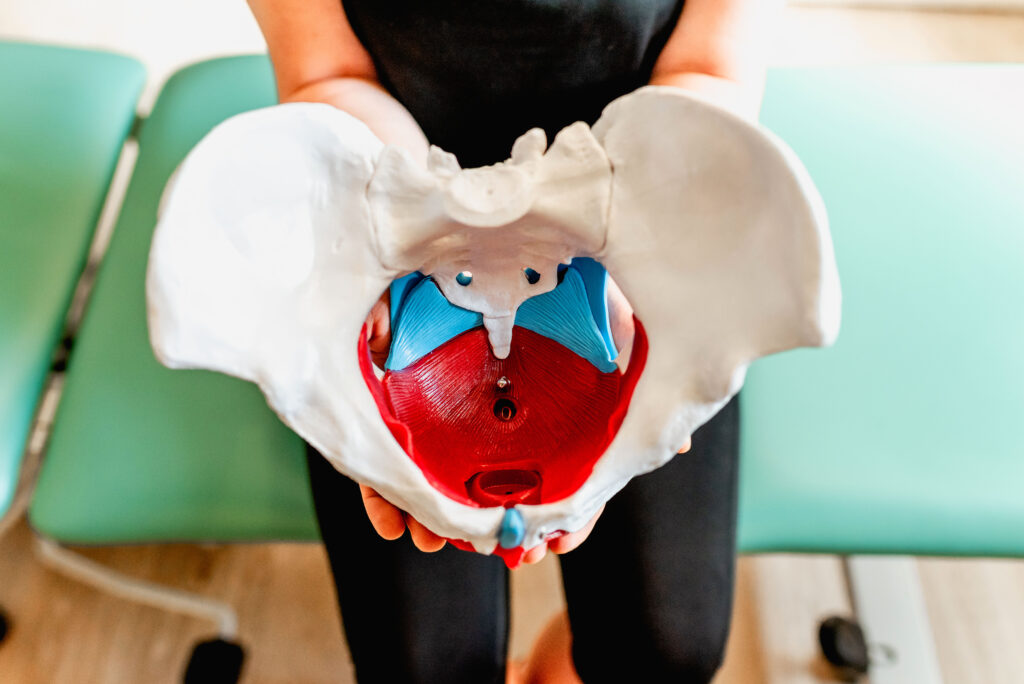
The pelvic floor, which is a hammock-like structure in the pelvis, it helps to support the internal organs and controls the bladder and bowel to prevent incontinence. By seeing a physiotherapist, we can help with advice and education around methods to help your POP, and to guide you effectively on how to strengthen your pelvic floor. Strengthening and retraining your pelvic floor can help to make the symptoms of a pelvic organ prolapse less bothersome.
For more information, have a look at this booklet about pelvic organ prolapse
https://thepogp.co.uk/_userfiles/pages/files/resources/232207pogpprolapse.pdf