

What is the pelvic floor?
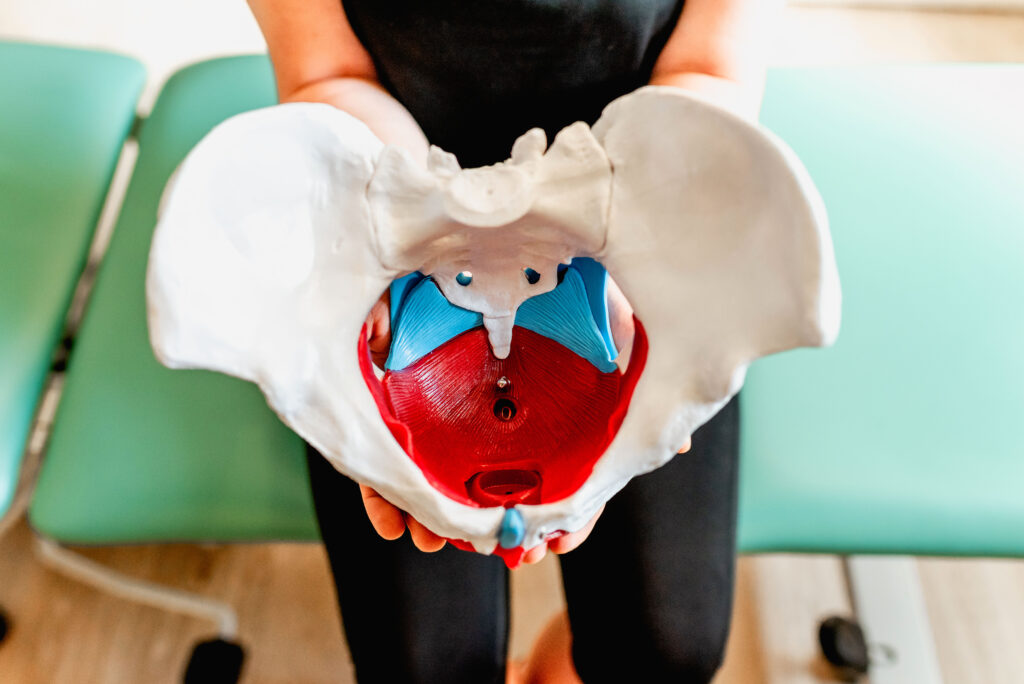
The pelvic floor is a sling of muscles and other soft tissue, almost like a hammock, that sits deep
inside your pelvis. The pelvic floor stretches from your pubis bone at the front to your coccyx/
tailbone at the back. They also sit between each ischial tuberosity (sitting bones) and run
horizontally.
The role of the pelvic floor is to support your pelvic organs (such as the uterus in women), as
well as assist with bowel, bladder and sexual function. When your pelvic floor muscles contract
they lift pelvic organs and tighten the openings of the vagina, anus and urethra. Relaxing these
muscles allows for the passage of urine and faeces. These muscles also relax during childbirth
to allow delivery of the baby through the birth canal.
Can pelvic floor therapy help me?
Pelvic floor assessment and treatment can help with a wide range of symptoms and conditions
including…
- Pelvic organ prolapse
- Bowel and bladder dysfunction e.g. continence issues
- Sexual problems
- Pelvic or anal pain
- Low back pain
- Abdominal pain
- Endometriosis
- Recovery post surgery e.g. prostate surgery, c section, hysterectomy
- Postpartum pain
What to expect from a pelvic floor therapy appointment?
You will be asked to sign a consent form prior to your appointment.
The three main components of a pelvic floor therapy session involve:
- Case history- a detailed and tailored case history will be taken in a private closed
treatment room. You are also welcome to bring a chaperone such as a friend or family
member or one can be provided for you. The case history typically involves asking
questions related to bowel, bladder and sexual function. If you are coming in due to
postpartum pain there will also be questions around your pregnancy, birth and recovery. - Assessment- this is divided into two components: an external examination and an
internal examination. The external assessment may involve an examination of your
pelvis, lower back, abdomen and hips as well as some everyday movement patterns.
The internal examination involves assessing vaginally. You will be offered a chance to
use the bathroom prior to this examination if needed. The therapist will place a finger
into the vagina, and through this it is possible to feel the vaginal walls near the bladder
and the rectum, as well as to test the power of your pelvic floor muscles. This provides
very helpful information about the support of your pelvic organs and the strength of your
muscles, so that a tailored treatment plan can be created.
You do not have to have an internal examination if you are not comfortable and it is fine
to change your mind. - Treatment- this will be personalised to you and your goals. There are lots of options for
treatment including manual therapy techniques such as soft tissue massage, articulatory
techniques and rehabilitation exercises. Lifestyle changes may also be discussed and
advised upon and assistive tools such as vaginal cones (tampon shaped weights) or
pessaries may be recommended. In some cases we may refer you onwards for more
specialised treatment if required.
What do I wear to my pelvic floor therapy appointment?
Whatever you are most comfortable in. Typically loose fitting comfortable clothes that you can
move in are recommended but our practitioners are flexible and can work around you.
Anything else I need to know?
If you have any concerns or worries prior to the appointment feel free to get in contact and one
of our practitioners will answer any questions you may have.