In the realm of sports injuries, few are as feared and debilitating as the anterior cruciate
ligament (ACL) injury. This tiny ligament plays a crucial role in stabilising the knee joint,
and when torn, it may put a pause in an athlete’s career. As a physiotherapist, witnessing
the journey of individuals recovering from ACL injuries unveils a tale of resilience,
patience, and dedication. These injuries can not only affect physical health but also
mental well-being. Here, I’ll guide you through the stages of ACL injury and rehabilitation,
shedding light on the process.
The Injury:
ACL injuries commonly occur during activities involving sudden stops, changes in
direction, or direct blows to the knee. Sports like football, basketball, and skiing are
notorious for such injuries. When an ACL injury occurs, it’s often accompanied by a
popping sensation, swelling, and immediate instability in the knee joint. This injury can
range from a partial tear, where the ligament is damaged but still intact, to a complete
tear, where the ligament is completely severed.
Depending on the severity of the injury, the individual’s activity level and goals, and the
presence of associated knee injuries, a surgical intervention might be opted for. ACL
reconstruction surgery involves replacing the torn ligament with a graft, typically
sourced from the patient’s own hamstring tendon, patellar tendon, or a donor tendon.
The procedure is performed via keyhole surgery (aka arthroscopically), using small
incisions and a camera to guide the surgeon. During surgery, any associated injuries,
such as meniscal tears or cartilage damage, may also be addressed.
Now, let me quickly run through the process of ACL injury rehabilitation, separating out
the different phases to whether this applies to patients who had undergone surgery or
not after their ACL injury:
Immediate to Early Rehabilitation – for ACL injury without surgery (0-6 weeks):
Immediately after an ACL injury, the focus lies on pain management and reducing
inflammation through RICE therapy, complemented by gentle range-of-motion exercises.
As the acute phase subsides, typically within 2-6 weeks, rehabilitation progresses to
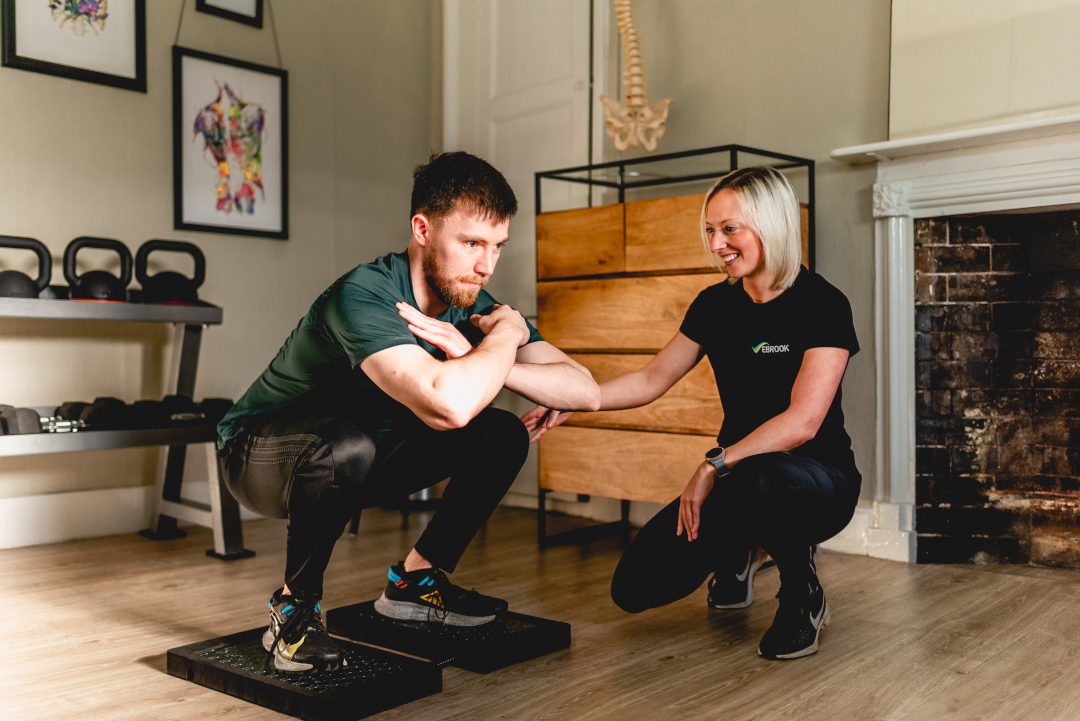
regaining mobility and strength. Physiotherapy sessions incorporate exercises targeting
quadriceps and hamstring strength, alongside balance and proprioception training to lay
the foundation for subsequent stages.
Mid to Advanced Rehabilitation- for ACL injuries without surgery (6-12 weeks
onwards):
Around 6 weeks post-injury, patients often undergo a significant shift in their
rehabilitation journey. This period marks a pivotal transition to mid-rehabilitation,
characterised by notable improvements in mobility and a decrease in pain. With these
positive developments, the focus intensifies on restoring functional movement patterns
and preparing the individual for more dynamic activities. Physiotherapy sessions during
this phase are tailored to incorporate advanced exercises such as plyometrics, agility
drills, and sport-specific movements. These exercises not only bolster muscle strength
and endurance but also enhance neuromuscular control, crucial for maintaining balance
and coordination, ultimately gearing individuals towards a safe return to their desired
level of activity.
As patients progress through mid-rehabilitation, they are gradually exposed to
increasingly challenging exercises aimed at replicating the demands of their chosen
sport or physical activities. Plyometrics, involving rapid and explosive movements, serve
to improve power and agility, while agility drills enhance quick changes in direction and
spatial awareness. Moreover, sport-specific movements are introduced to simulate the
specific actions and biomechanical demands encountered during athletic endeavours.
This comprehensive approach not only facilitates the reconditioning of the injured knee
but also instils confidence and readiness for a full return to activity, under the careful
guidance of physiotherapists.
Post-Surgery Rehabilitation- for ACL injuries WITH and WITHOUT surgery (12 weeks
onwards):
For individuals undergoing ACL reconstruction surgery, the rehabilitation trajectory
aligns with the mid to advanced stages of non-surgical rehabilitation, typically starting
around 12 weeks post-surgery. As strength and confidence in the knee increase,
patients gradually reintegrate pre-injury activities under the guidance of
physiotherapists. This involves sports-specific training, progressive loading, and
functional testing to gauge readiness for a full return to sport.
After ACL reconstruction surgery, it’s crucial to follow the specific guidelines provided by
the surgeon and physiotherapist regarding post-operative care. Typically, immediately
after surgery, the knee will be immobilised using a brace or splint to protect the surgical
site and allow for initial healing. In most cases, patients are instructed to avoid putting
weight on the operated leg and to limit movement of the knee joint.
However, Gentle range-of-motion exercises may be initiated early on to prevent stiffness
and promote circulation. These exercises are usually performed under the guidance of a
physiotherapist and may include ankle pumps, heel slides, and passive knee bends.
These movements are carefully controlled and within the limits set by the surgeon to
avoid compromising the integrity of the surgical repair.
Long-Term Management- for ACL injuries WITH and without surgery:
Irrespective of the treatment approach, long-term management is vital to sustain knee
health and prevent future injuries. This entails ongoing strength and conditioning
exercises, proprioceptive training, and injury prevention strategies. Regular monitoring
and adjustments to the rehabilitation plan ensure continued progress and resilience in
the injured knee, supporting individuals in maintaining an active and fulfilling lifestyle.
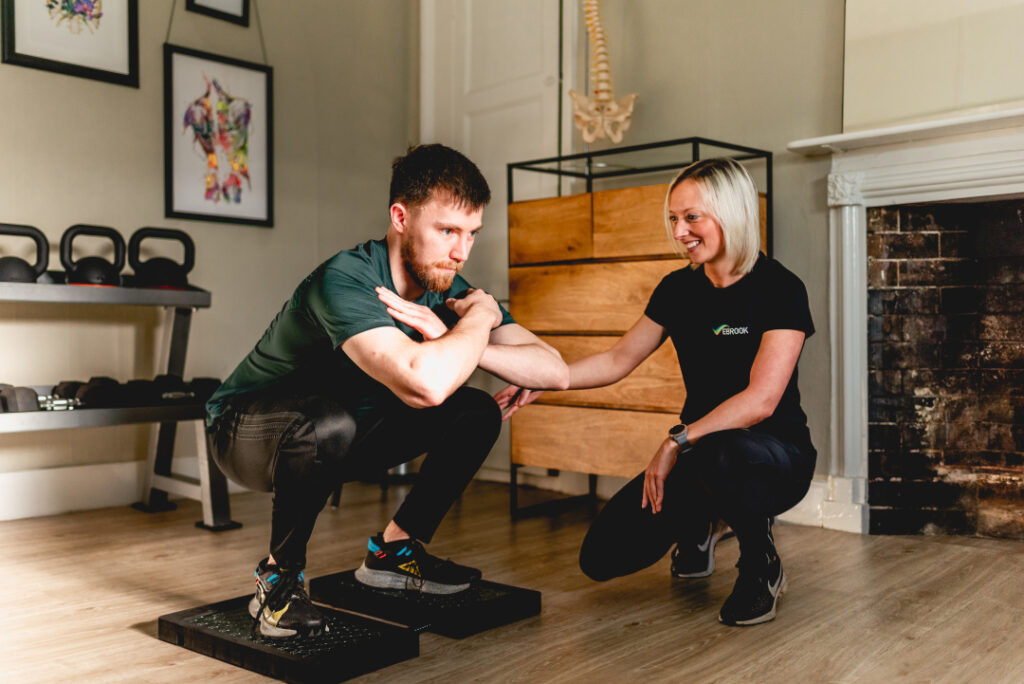
Long-term management after ACL injury involves a variety of exercises aimed at
improving strength, stability, and overall knee function. Examples of exercises include:
- Strength Training: Squats, lunges, leg presses, hamstring curls, calf raises, and
hip abduction/adduction exercises to target the quadriceps, hamstrings, calves,
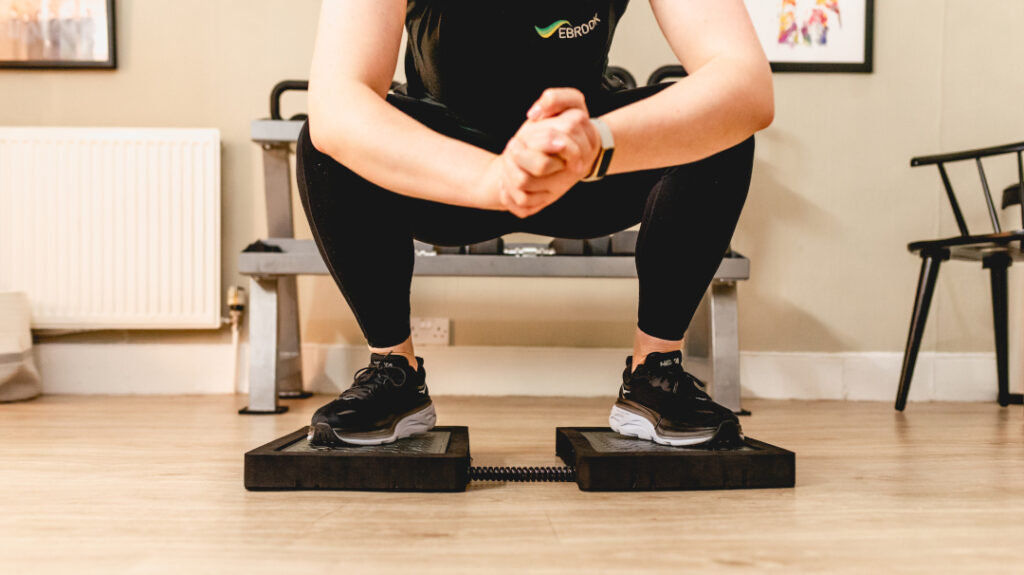
and hip muscles. - Proprioceptive Training: Single-leg balance exercises, balance board drills,
stability ball exercises, and proprioceptive neuromuscular facilitation (PNF)
techniques to improve joint position sense and neuromuscular control. - Plyometric Exercises: Jump squats, box jumps, bounding drills, and lateral
hops to enhance power, agility, and coordination. - Agility and Coordination Drills: Shuttle runs, ladder drills, cone drills, and agility
ladder exercises to improve agility, reaction time, and sport-specific movements. - Core Strengthening: Planks, bridges, Russian twists, and bicycle crunches to
strengthen the core muscles, which contribute to overall stability and balance. - Flexibility Exercises: Static and dynamic stretches targeting the quadriceps,
hamstrings, calves, hip flexors, and IT band to maintain flexibility and prevent
muscle tightness.
Gradual Return to Sport:
As the patient progresses through advanced rehabilitation and demonstrates sufficient
strength, stability, and confidence in the knee, they can begin a gradual return to
sport-specific activities. Physiotherapists work closely with patients to develop a
structured return-to-sport program, gradually increasing the intensity and duration of
training sessions while closely monitoring for any signs of discomfort or instability.
In conclusion, ACL injury rehabilitation is a journey that requires dedication, patience,
and expert guidance. By understanding the stages of rehabilitation and working closely
with a physiotherapist, individuals can overcome the challenges posed by ACL injuries
and emerge stronger than ever.