
Beginning the journey to recovery after knee replacement surgery can feel daunting and
overwhelming, but with the support of a dedicated physiotherapist, it transforms into a
journey of hope and progress. As a physiotherapist, my mission is to stand by knee
replacement patients, offering encouragement and guidance as they strive for a better
quality of life. In this blog post, I’ll be sharing valuable insights into the techniques and
strategies I implement at every stage of rehabilitation, from the immediate
post-operative period to the long-term recovery phase.
Initial Stage (Weeks 1-4):
In the initial weeks after knee replacement surgery, my primary objectives revolve
around managing post-operative pain, reducing swelling, and facilitating early
mobilisation to kickstart the recovery process. Gentle joint mobilisations, involving
controlled movements of the knee joint, help to restore normal joint mechanics and
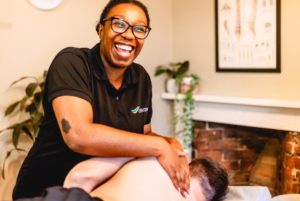
alleviate stiffness and discomfort. Soft tissue massage techniques, such as effleurage
and petrissage, are utilised to reduce muscle tension, improve blood circulation, and
promote tissue healing.
Passive range of motion (ROM) exercises are an integral component of the
rehabilitation programme during this phase. These exercises involve manually moving
the patient’s knee joint through its full range of motion without active muscle contraction.
By carefully guiding the joint through various movements, we aim to prevent the
development of joint contractures and maintain flexibility in the surrounding soft tissues.
In addition to manual therapy and passive ROM exercises, the use of icing plays a
crucial role in managing post-operative swelling and pain. Cold therapy is applied to the
surgical site to constrict blood vessels, reduce inflammation, and numb the area,
providing immediate relief from discomfort. Combining ice therapy with compression
wraps or elevation techniques further enhances its effectiveness by promoting fluid
drainage and reducing swelling more efficiently. Compression wraps help to exert gentle
pressure on the surgical site, preventing the accumulation of excess fluid, while
elevation of the affected leg above heart level encourages venous return and reduces
oedema.
Intermediate Stage (Weeks 5-10):
As patients transition into the intermediate stage of rehabilitation, my attention turns
towards the vital task of rebuilding strength, enhancing balance, and fine-tuning
functional movement patterns. To achieve these objectives, I incorporate targeted
resistance training exercises using resistance bands or light weights. These exercises
are designed to specifically target and strengthen the muscles surrounding the knee
joint, including the quadriceps, hamstrings, and calf muscles. By progressively
increasing resistance levels and repetitions, we aim to improve muscle endurance and
overall joint stability.
In addition to resistance training, balance and proprioceptive exercises play a crucial
role in this phase of rehabilitation. Activities such as single-leg stance exercises and
stability ball drills are introduced to challenge the patient’s neuromuscular control and
improve proprioception—the body’s awareness of its position in space. These exercises
ultimately lead to improved balance and stability during functional activities.
Gait training takes on a more intensive approach during the intermediate stage, with a
primary focus on achieving a natural walking pattern and reducing dependency on
assistive devices. Patients are guided through various walking drills and techniques to
improve stride length, step symmetry, and weight distribution. Emphasis is placed on
proper foot placement, posture, and pelvic alignment to optimise biomechanical
efficiency and reduce strain on the knee joint.
Long-Term Rehabilitation (Week 11+):
Finally, In the long-term phase of rehabilitation, the emphasis is on promoting functional
independence and preventing future complications. Advanced strengthening exercises,
such as squats, lunges, and step-ups, are incorporated to further improve muscle
strength and joint stability. Proprioceptive training on unstable surfaces or using
specialised equipment helps to enhance joint proprioception and reduce the risk of falls.
Functional activities and sports-specific drills are introduced to simulate real-life
demands and prepare patients for a return to their desired activities and hobbies.
In conclusion, as a physiotherapist, guiding knee replacement patients through
rehabilitation is a rewarding journey. By employing a combination of manual therapy,
exercise prescription, and functional training techniques, I aim to optimise each patient’s
recovery and empower them to regain confidence in their knee function. Collaboration with patients and ongoing support are key to achieving successful outcomes and
ensuring a smooth transition back to an active and fulfilling lifestyle.