
How can it help you?
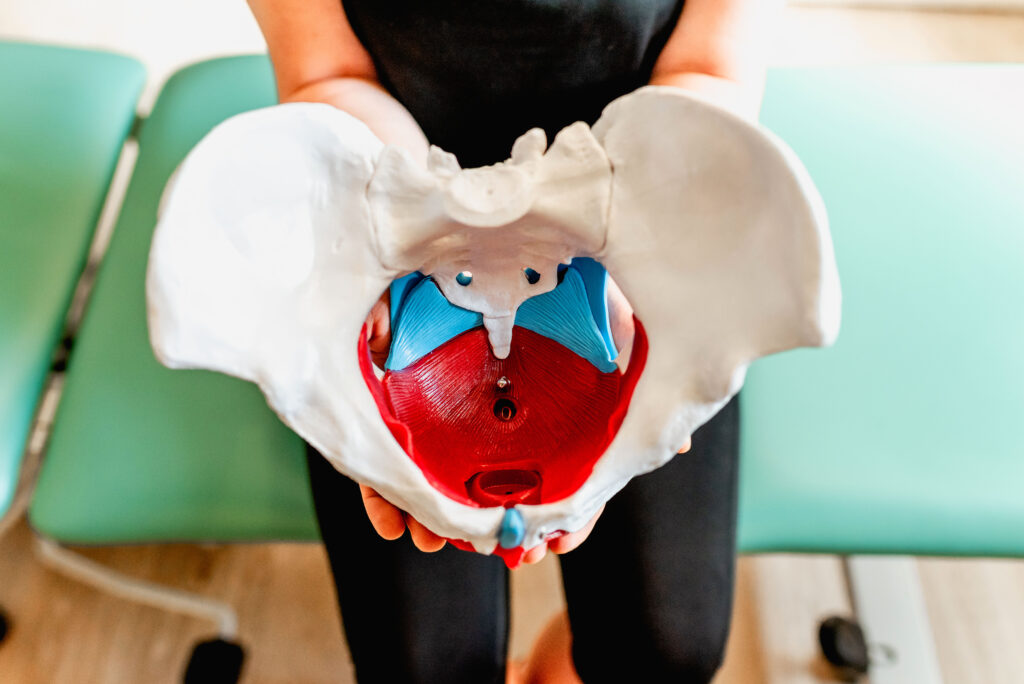
Pelvic health encompasses a range of conditions and presentations, commonly we see urinary
dysfunction – ‘bladder weakness’, prolapses, sexual dysfunction, and post-natal rehabilitation
(MUMMY MOT).
One of the most common conditions we see is urinary leakage. This is involuntary and can be classed
into three categories:
- Stress incontinence: leaking caused from exertions, commonly, sneezing, jumping,
coughing… - Urge urinary incontinence: leaking alongside urgency. For example, when you get home and
put your key in the door – “OMG I need the loo!” - Mixed: a mix of stress and urinary incontinence
- Overactive bladder: The feeling of you need to go to the loo regularly, with/without leakage,
and usually with frequency.
The NICE guidelines 2020 have said that pelvic health physiotherapy should be the first line
treatment for urinary incontinence. Just doing pelvic exercises a lone may not help, but with seeing a
physiotherapist, around 85% of women’s symptoms will improve with pelvic health physiotherapy.
What we do?
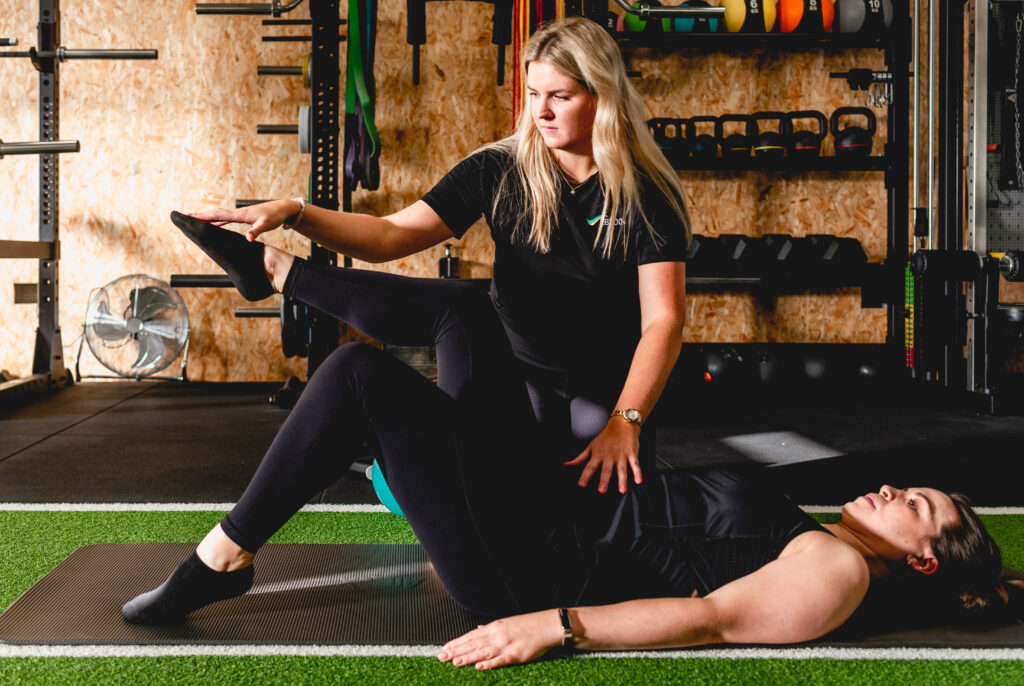
The appointment is similar to when you see us for any of your usual aches and pains, it’s just a
different body area. When you come to see to us, we will have an in-depth conversation to discuss
your symptoms and presentations, and a full medical history with be taken. We will then assess
dependent on your conditions, an internal examination may be warranted to allow us to get the best
assessment, buts this is always optional! We will do our best to provide you with relevant and
specific advice and education on your condition. Together, we will then create a treatment plan in
line with your goals, this may include a mixture of manual therapy and specific exercises. We will
work together to produce the best outcomes we can.
Why I’m passionate about women’s health:
As a former high performance female athlete, women’s health and optimisation of the menstrual
cycle has always been an interest to me. Through the month I’d experience different symptoms to
my male counter parts, back pain, irritability, low mood, and random bouts of sadness, yet I was
expected to do the same as them. Although these symptoms aren’t random, they are linked to my
menstrual cycle, yet this was never really explained or factored into my training. Now as a
physiotherapist I have a great passion for women’s health and having open discussions with one and
another. When I was doing my masters in Newcastle I did a placement in the Royal Infirmary
Hospital, where I had the most amazing experience, learning about urinary dysfunction, prolapses,
and post-natal health. Since then, I’ve known I want to become a pelvic health physiotherapist.
My further training:
I gained a solid foundation in pelvic health during my placements but now as a charted
physiotherapist I am delving deeper, to gain as much knowledge as possible to help my patients. I
completed my Urinary dysfunction training with the Pelvic, Obstetric, and
Gynaecological Physiotherapy group (POGP), which is the special interest group in my profession.
Within this course we are improving skills in assessment and management of women with complex
pelvic floor pain and dysfunction. We are developing advanced internal and external treatment skills,
including manual therapy, exercise prescription and an understanding of pain management. These
skills combined allows me to work with you to create patient centred goals for the management of
your pelvic health condition.
In the near future I plan on studying in depth post-natal rehabilitation, to ensure you get the best
management post the birth of your baby. Managing your own recovery post-Nataly is important, to
allow you to get back to the exercise and movement that you enjoy.